IMDb >
Sorstalanság (2005)
Watch It
Buy it at Amazon
Rent it at Blockbuster.com
Discuss in Boards More at IMDb Pro Add to My Movies Update Data
BETA
Discuss in Boards More at IMDb Pro Add to My Movies Update Data
Quicklinks
Top Links
trailers and videosfull cast and crewtriviaofficial sitesmemorable quotesOverview
main detailscombined detailsfull cast and crewcompany creditstv scheduleAwards & Reviews
user commentsexternal reviewsnewsgroup reviewsawardsuser ratingsparents guiderecommendationsmessage boardPlot & Quotes
plot summarysynopsisplot keywordsAmazon.com summarymemorable quotesFun Stuff
triviagoofssoundtrack listingcrazy creditsalternate versionsmovie connectionsFAQOther Info
merchandising linksbox office/businessrelease datesfilming locationstechnical specslaserdisc detailsDVD detailsliterature listingsNewsDeskPromotional
taglines trailers and videos posters photo galleryExternal Links
showtimesofficial sitesmiscellaneousphotographssound clipsvideo clipsSorstalanság (2005) More at IMDbPro »
| Videos (see all 6 NEW) |
Overview
User Rating:
Release Date:
10 February 2005 (Hungary) moreTagline:
You can close your eyes. You can turn away. But you will never forget.Plot:
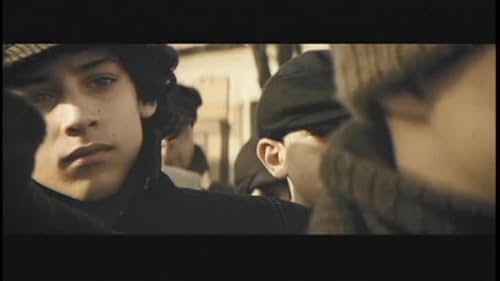
14-year-old György's life is torn apart in World War II Hungary as he is sent to a concentration camp where he is forced to become a man, and learns to find happiness in the midst of hatred, and what it really means to be Jewish. full summary | add synopsisAwards:

2 wins & 3 nominations moreUser Comments:
A fresh look at the worst of times more (36 total)Cast
(Cast overview, first billed only)| Marcell Nagy | ... | György Köves | |
| Béla Dóra | ... | Smoker | |
| Bálint Péntek | ... | Pretty boy | |
| Áron Dimény | ... | Bandi Citrom | |
| Péter Fancsikai | ... | Older Kollmann boy | |
| Zsolt Dér | ... | Rozi | |
| András M. Kecskés | ... | Finn | |
| Dani Szabó | ... | Moskovich | |
| Tibor Mertz | ... | Fodor | |
| Péter Vida | ... | Lénárt | |
| Endre Harkányi | ... | Old Kollmann | |
| Márton Brezina | ... | Younger Kollmann boy | |
| Zoltán Bukovszki | ... | Zoli | |
| Gábor Nyiri | ... | Hedge | |
| Jenö Nagy | ... | Jenö |
Additional Details
Also Known As:
Fateless (Germany) (Berlin film festival title) (International: English title)Fateless - Roman eines Schicksallosen (Germany)
more
MPAA:
Rated R for some disturbing Holocaust images including nudity, and brief strong language.Parents Guide:
View content advisory for parentsRuntime:
USA:140 min | Canada:140 min (Vancouver International Film Festival) | Canada:134 min (Toronto International Film Festival) | Argentina:140 minColour:
ColourAspect Ratio:
2.35 : 1 moreSound Mix:
Dolby DigitalCertification:
Iceland:12 | Ireland:12A | Portugal:M/12 | Australia:M | USA:R | Finland:K-11 | Netherlands:12 | Argentina:16 | Norway:15 | Singapore:NC-16Fun Stuff
Trivia:
Forget-Me Not Street is a real street in Budapest about two blocks from the East Station (Keleti Pajaudvar). moreSoundtrack:
Holdvilágos éjszakán (On a Moonlit Night) moreFAQ
This FAQ is empty. Add the first question.more (36 total)
Message Boards
Discuss this movie with other users on IMDb message board for Sorstalanság (2005) moreRecommendations
If you enjoyed this title, our database also recommends:
Show more recommendations
|
|
|
|
|
| La tregua | Paragraph 175 | The Boy in the Striped Pyjamas | Europa Europa | Schindler's List |
|
IMDb User Rating:
|
IMDb User Rating:
|
IMDb User Rating:
|
IMDb User Rating:
|
IMDb User Rating:
|
Related Links
| Full cast and crew | Company credits | External reviews |
| IMDb Drama section | IMDb Hungary section | Add this title to MyMovies |


Critics have compared Fateless to such other award winning films around the same subject, notably Robert Benigni's Life Is Beautiful (aka: La Vita è Bella, 1997), and Spielberg's Schindler's List (1993). Whilst in interview on the UK DVD the director Koltai doesn't mention Benigni's comedy of doom, in passing he does cite the Spielberg, to whom he makes it clear that Fateless is in some degree at least, a riposte. For the director, Schindler's List is "a mistake for those who know what really happened" is his view, which represents "no victory for humanity." The determined un-sentimentality of Koltai's film reflects that view, something which he goes as far as to transpose formally into a particular editing technique - an approach that audiences, more used to a cosy and somewhat predictable view of the Holocaust, will find striking. Koltai's treatment of narrative in his film, characteristically breaking down stark events into short, impressive scenes that fade to black, he terms "a series of études." Such a treatment serves to isolate the protagonists in time, away from the emotionality that a more connected continuity encourages. Indeed for Koltai "time is the... terrible... sentence," and the main motive behind his film, rather than outright shock, and his film has great power precisely through this denial of the usual response.
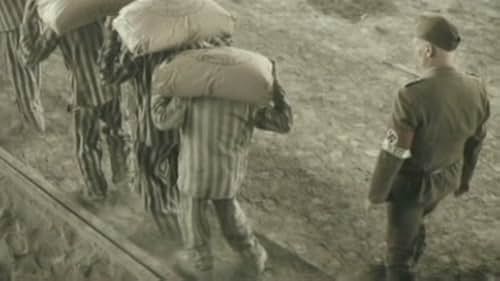
An easy criticism of Fateless is that conditions of the camp are shown as persistently harrowing, but rarely explicitly violent. The hero Köves is starved, slapped and humiliated, but rarely does the viewer see an on-screen killing, even if the stench of the crematoria is omnipresent. So much is real horror left unseen in fact that at the close of the film, upon his return, there's a scene where Köves is quizzed about the existence of gas chambers by a doubtful citizen at his home station. As a confirmation it is surely unnecessary for the audience, as we've seen them earlier. One suspects that the importance of this brief exchange is instead to assert, once and for all, that Köves acknowledges the reality of the horror he's seen. Whether or not such epic tragedy, and his involvement in it, has enriched his humanity, a la Spielberg, is another matter entirely. By the end, Köves thinks back to his experience almost nostalgically, to the camps where "life was cleaner and simpler" and "where there's nothing too unimaginable to endure." As one might expect from an acclaimed cinematographer, much of Fateless looks superb. Whether its the snowflakes, like the millions of spirits already departed, floating inside the cattle trucks that speed the Hungarian Jews to their fate, or the field of camp mates, paraded mercilessly in the heat, and wavering in their distinctive striped uniforms, Koltai's eye creates haunting moments which remain with the viewer long after the closing credits. Arguably such poetry detracts from the grim reality of the camps in which a good deal of the film is set; but a good deal of the film is shot in muted colours, a blanched scheme, as if the warmth of life has bled out into genocide.
Performances are generally excellent, notably that of Nagy. Interviews on the disc show the young actor's nervousness at some of the more demanding scenes (and the increasing time required spent in make up as his on screen physical deterioration continues) but he plays a role which takes him from the dining room of the family home of Budapest to the death carts of Zief, without faltering. Fateless is an international co-production between Hungary, German and England. All three languages make their appearance, and so - incidentally - does the new James Bond, Daniel Craig, as Köves' liberation approaches. Here playing a concerned GI, who strongly suggests the boy seeks out a new life and a university place in the west, Craig makes a brief, if effective impression. As it turns out Köves' ultimate decision is characteristic of a film that favours reality over idealism.
But for those who seek the unrelenting grimness of camp life depicted as in, say, One Day In The Life of Ivan Denisovitch (1970), or the memorable depiction of the hardening of innocence into vengeful shock (Come And See), Fateless will doubtless prove a slight disappointment. Ennio Morricone's excellent score notwithstanding, which gives events here an occasionally pathetic sheen, this is a film which in many ways raises more issues and questions than it answers, and certainly offers no stereotypical picture of a ghastly time. Instead, by asking the audience to question preconceptions, it stakes claim to being one of the more important Holocaust dramas of our time.