|
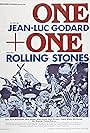
Sympathy for the Devil (1968)
6.2
Godard's documentation of late 1960's western counter-culture, examining the Black Panthers... See full summary » Director:Jean-Luc GodardWriter:Jean-Luc Godard |
|
Sympathy for the Devil (1968)
6.2
Godard's documentation of late 1960's western counter-culture, examining the Black Panthers... See full summary » Director:Jean-Luc GodardWriter:Jean-Luc Godard |
| Cast overview, first billed only: | |||
|
|
Sean Lynch | ... |
Commentary
(voice)
|
| Mick Jagger | ... |
Himself - The Rolling Stones
|
|
|
|
Brian Jones | ... |
Himself - The Rolling Stones
|
| Keith Richards | ... |
Himself - The Rolling Stones
(as Keith Richard)
|
|
| Charlie Watts | ... |
Himself - The Rolling Stones
|
|
|
|
Bill Wyman | ... |
Himself - The Rolling Stones
|
|
|
Anne Wiazemsky | ... |
Eve Democracy
|
|
|
Iain Quarrier | ... |
Fascist porno book seller
|
|
|
Frankie Dymon | ... |
Black power militant
(as Frankie Dymon Jnr.)
|
|
|
Danny Daniels | ... |
Black power militant
|
|
|
Illario Pedro | ||
|
|
Roy Stewart | ... |
Black power militant
|
|
|
Linbert Spencer | ||
|
|
Tommy Ansah | ||
|
|
Michael McKay | ||
Godard's documentation of late 1960's western counter-culture, examining the Black Panthers, referring to works by LeRoi Jones and Eldridge Cleaver. Other notable subjects are the role of the media, the mediated image, A growing technocratic society, Womens Liberation, the May revolt in France and the power of language. Cutting between 3 major scenes, including the Rolling Stones in the studio, the film is visually intercut with Eve Democracy (Wiazemsky) using graffiti which amalgamates organisations, corporations and ideologies. Godard also examines the role of the revolutionary within western culture. Although he believes western culture needs to be destroyed, it can only be done so by the rejection of intellectualisation. "There is only one way to be an intellectual revolutionary, and that is to give up being an intellectual" Written by <gary.elshaw@vuw.ac.nz>
Plot Summary | Add Synopsis